
Wind damage is not always obvious. A roof can remain fully covered while individual shingles have been lifted, creased, loosened or partially detached from the seal strip. Those conditions are difficult to evaluate from the driveway and can become more important after repeated weather events.
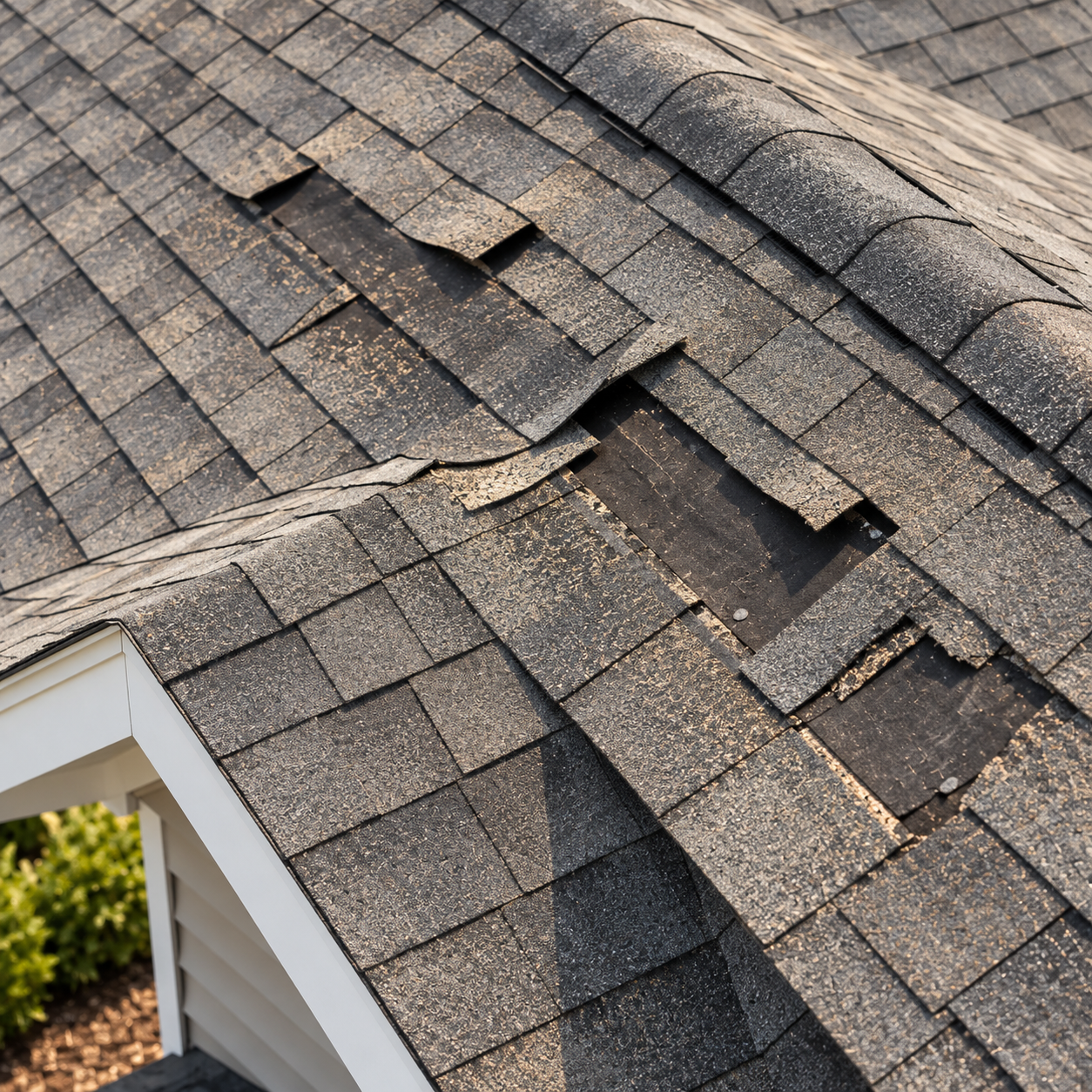
Lifted or unsealed shingles
Asphalt shingles are designed to lie flat and seal to the course below. Strong wind can lift the edge of a shingle and stress that bond. In some cases the shingle settles back down afterward, making the condition difficult to see from ground level.
A lifted area may also collect debris, allow wind to get underneath the next time conditions worsen or expose fasteners and joints that were intended to remain covered.
Creases across the shingle surface
When a shingle is bent sharply by wind, a visible crease can form across the mat. The crease may run horizontally or diagonally and can indicate that the shingle flexed beyond its normal installed position.
Not every surface mark is storm damage, which is why the location, pattern and surrounding roof condition need to be considered together.
Missing or displaced shingles
Missing shingles are the easiest wind-related condition to recognize. Displacement can also be more subtle: a shingle may shift, rotate or break at the fastener line while remaining partially attached.
Once part of the roof covering is displaced, the layers below can be exposed to direct weather and should be evaluated promptly.
Damage around ridges, rakes and roof edges
Wind pressure is often strongest around roof perimeters and elevated transitions. Ridge caps, rake edges and corner areas deserve particular attention because wind can work underneath exposed edges more easily than it can in the middle of a tightly sealed roof field.
Flashing and accessory movement
Storm inspections should not stop at the shingles. Metal flashing, pipe boots, ridge ventilation, vents and other roof accessories can also loosen or shift. Water intrusion frequently begins at a transition or penetration rather than in the middle of an otherwise intact roof plane.
Why a ground-level check is not enough
Binoculars and photographs from the ground can reveal obvious missing material, but many important conditions require a closer view. A professional inspection can document individual roof planes, transitions, penetrations and areas that may not be visible from one vantage point.
Photography is especially useful because it creates a record of what was observed at that time instead of relying only on a verbal description.
Repairability matters as much as the damaged area
A small damaged area does not automatically mean a small repair is appropriate. The surrounding shingles must still be flexible enough to lift and manipulate without causing additional damage, and replacement material needs to be reasonably compatible with the existing roof.
Age, brittleness, discontinued products, repeated prior repairs and damage across multiple roof planes can all change the practical repair options.
What to do after a wind event
- Walk the property from the ground and look for missing shingles or material on the lawn.
- Check ceilings and attic areas for new staining or active moisture where safely accessible.
- Photograph visible changes without climbing onto a wet, steep or damaged roof.
- Schedule an inspection if you see damage or if the property was exposed to significant wind.
- Keep records of temporary repairs and any interior damage that develops.
Inspection and insurance documentation are different from coverage decisions
A roofing contractor can inspect the property, photograph visible conditions, identify repair considerations and prepare a construction scope. Insurance coverage, causation determinations and payment decisions remain with the carrier and the terms of the policy.
Clear contractor-side documentation can still be valuable because it gives the property owner a detailed record of the roof condition and the work that may be required.
Document the roof before the next storm.
RRMasters can inspect visible exterior conditions and organize photos and findings around the property.