
A finished roof is easy to judge by the surface you can see. The real performance of the system, however, depends on the layers and details underneath it: the roof deck, water-defense membranes, underlayment, flashing, ventilation, edge metal and the finished roofing material working together.
The roof you see is only the final layer
When a roof replacement is done correctly, the installation process exposes parts of the home that are normally hidden. That is when the condition of the deck can be evaluated, vulnerable areas can be protected and the details around valleys, walls, chimneys, vents and other penetrations can be rebuilt as part of one coordinated system.
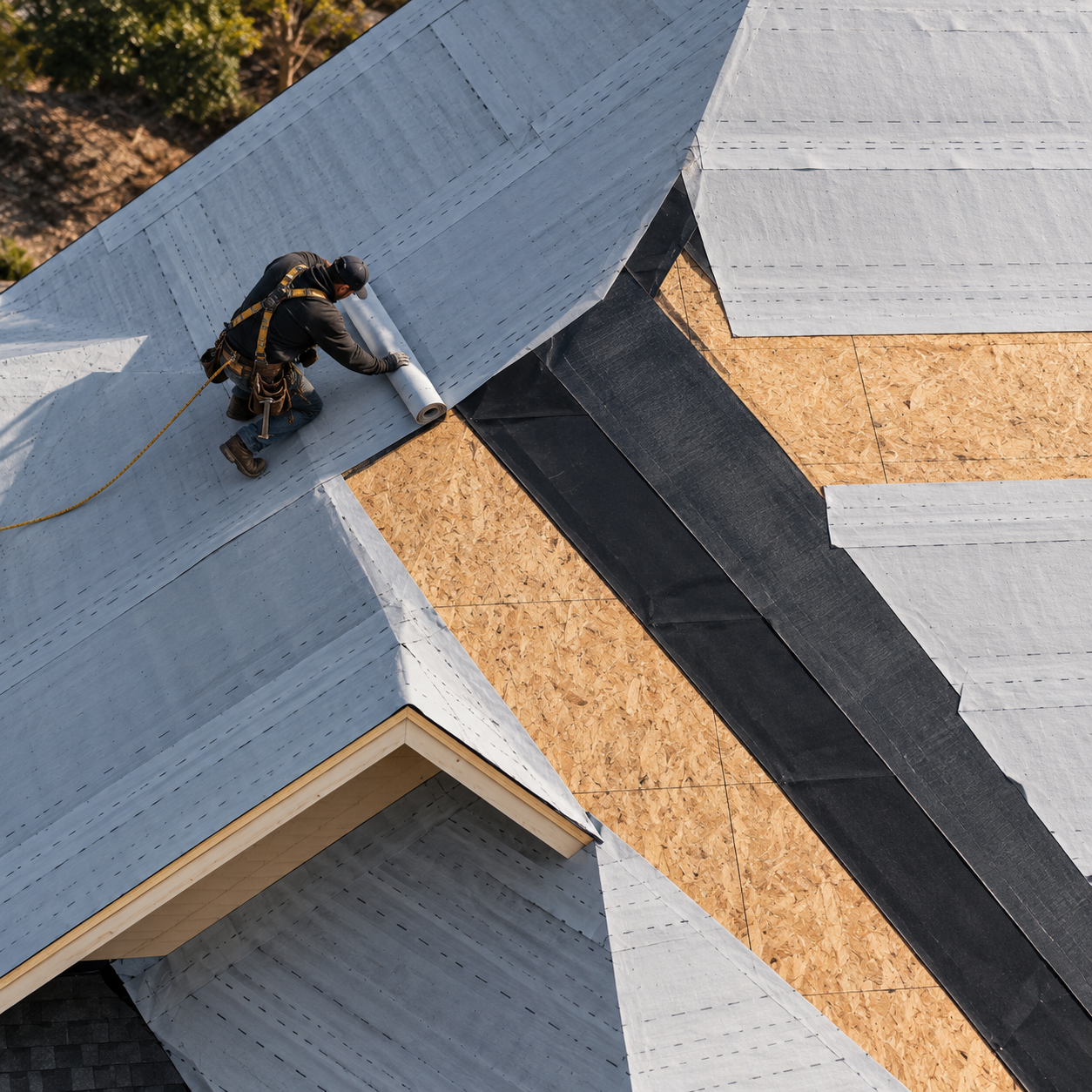
1. Roof decking: the structural foundation
The roof deck is the wood surface attached to the framing. Everything above it depends on that deck being sound enough to hold fasteners and provide a stable installation surface.
During tear-off, areas affected by long-term leakage, rot, delamination or prior patching can become visible. Damaged decking should be addressed before the new roof system covers it again. A proposal should also explain how replacement decking is handled so there are no surprises once the roof is opened.
2. Ice-and-water protection in vulnerable areas
Self-adhered water-defense membrane is commonly used where water is most likely to back up or concentrate, including eaves, valleys and certain penetrations or transitions. The exact placement depends on the roof design, local requirements and the system being installed.
This layer is important because wind-driven rain and water moving beneath the finished roof surface tend to find the most vulnerable transitions first.
3. Underlayment across the roof deck
Underlayment creates an additional separation layer between the deck and the exterior roof covering. Modern synthetic underlayments are commonly used beneath asphalt shingles and many metal-roof assemblies.
The underlayment is not a substitute for the finished roofing material, but it is part of the complete water-management strategy during installation and throughout the life of the roof system.
4. Edge metal, valleys and flashing details
Some of the most important roofing work happens at the places where one surface meets another. Drip edge, valley details, step flashing, counterflashing, pipe penetrations, skylights and wall transitions all need to move water safely off the roof without relying on exposed sealant as the primary defense.
- Eaves and rakes: edge metal helps manage water at the perimeter of the roof.
- Valleys: these areas collect water from multiple roof planes and require careful water-shedding details.
- Walls and chimneys: step flashing and counterflashing must integrate with both the roof and the adjoining wall surface.
- Penetrations: plumbing vents, exhausts and other openings require compatible flashing components.
5. Ventilation is part of the roofing system
A roof does not work in isolation from the attic below it. Intake and exhaust ventilation help manage heat and moisture in the attic space when the building design allows for a balanced ventilation approach.
Replacing the roof is a good time to inspect whether existing intake and exhaust paths are present, blocked, undersized or incompatible with the new roof configuration.
6. The finished surface: shingles or metal
The visible roof covering is the final weather-facing layer. Architectural asphalt shingles, standing-seam metal and low-slope membranes each require their own installation details, fastening methods, flashing components and manufacturer-specific accessories.
Choosing a finish should therefore happen together with decisions about the complete assembly rather than as a color-and-product decision alone.
What a complete proposal should make clear
- What happens to the existing roof materials and how tear-off is handled.
- How damaged decking will be identified and priced if replacement is needed.
- What underlayment and water-defense membranes are included.
- How valleys, walls, chimneys, skylights and penetrations will be treated.
- What ventilation work is included.
- What manufacturer system components and accessories are being installed.
- How cleanup, debris removal and final inspection are handled.
The finished roof should reflect the work underneath it
A clean exterior appearance matters, but the long-term quality of a roof is built before the final shingles or panels go on. RRMasters approaches roof replacement as a system: inspect the existing condition, define the water-management details, build the assembly and then finish the exterior surface.
Start with the condition underneath.
Request an inspection so the scope can be built around the actual property rather than assumptions.